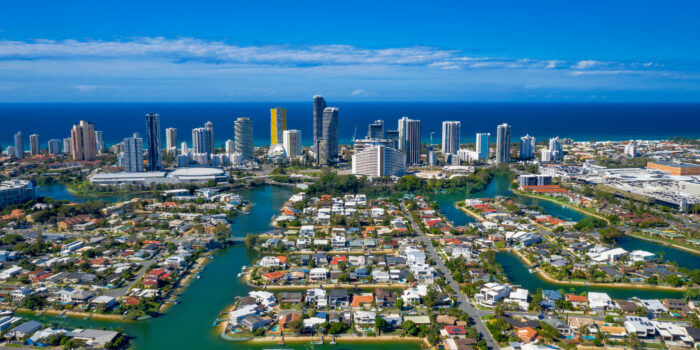


Elderly couple Li Qing Zhuang and Ding Sen Wang owned the residence at 7 Vaucluse Road in Sydney’s prestigious eastern suburbs.
Their company, Everest Index International, had defaulted on a $13 million loan taken out in 2022 and secured by the property. In 2023, a new lender, CPF Group, advanced short-term finance of $14.15 million so the earlier lender could be paid out and the owners could market and sell the home themselves.
That refinancing did not remove the pressure but changed its shape. The CPF facility was secured by the property, with Everest as borrower and Zhuang, Wang and their son Richie Wang all signed on as guarantors.
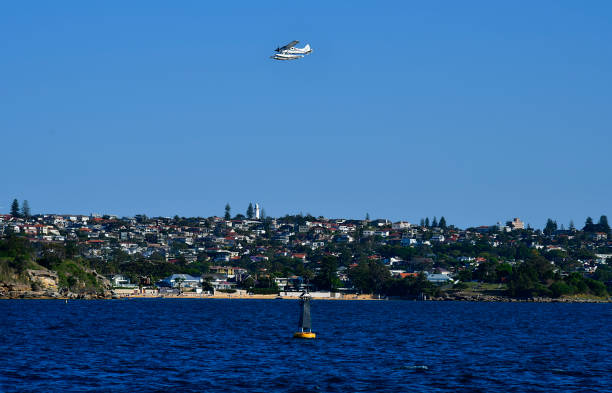
The CFP loan was advanced in May 2023 and expressed to be temporary on the basis the property was to be sold.
The ‘non-default’ rate of interest on the loan was 13.3% p.a. and the default rate, 16%. A reduced interest rate would apply upon an unconditional sale contract being exchanged by 1 September 2023. Interest could be capitalised, but that made delay very expensive.
Offers were received for the home at $20 million but the family’s asking price held firm at $23.888 million.
When CPF eventually called on repayment, Zhuang and Wang argued that its conduct was unconscionable and that the loan and mortgage were unjust.
Mark Green, the solicitor involved in arranging and documenting the refinance, acted for the borrowers and also for CPF. He was also an officer of a company that assisted CPF with managing the funds.
Green later conceded he had not adequately disclosed that conflict to Zhuang and Wang and that the non-disclosure breached his fiduciary duty to them but that wasn’t enough to escape the consequences of the loan default.
They contended CPF had taken security over the home of elderly retired people who could not repay the debt, without independent advice, and that they would have been better off if the earlier lender had simply sold the property.
The matter came before Justice Robertson Wright in the NSW Supreme Court.
He considered the borrowers’ contentions irrelevant because the refinancing was not designed to be repaid from their labour or income. It was designed to give them breathing space to sell the property rather than have a mortgagee sale.
He found the CPF facility was commercially preferable to the realistic alternatives then available: it avoided a judgment for possession by the prior lender, carried lower fees than that lender’s proposed forbearance arrangement and had a lower interest rate even at its higher rate.
Evidence also proved Zhuang and Wang had commercial experience, understood the essential deal through correspondence and translation by their son and were not pressured into signing. There was no other viable refinance on the table.
The court found that the borrowers delayed the sale by waiting in the expectation that the market would improve. By the end of March 2026, the debt had grown to $21.6 million.
The solicitor’s conflict produced a separate claim for equitable compensation. That claim also failed with the judge reasoning that, even with independent advice and full disclosure, the owners would probably have taken the CPF refinance to avoid an immediate mortgagee sale.
They had not proved that the conflict caused any loss.
CPF obtained judgment for $21.6 million and possession of the Vaucluse property, and costs.
CPF Group Pty Ltd v Everest Index International Pty Ltd [2026] NSWSC 416, Wright J, 24 April 2026.