

In the quiet farming heartland of Queensland’s Barambah Creek, a dirt levee sparked a legal storm that raged for nearly a decade — and ended with a judge ordering it torn down.
It all started when Peter and Margaret Enkelmann, along with their son Brett, built what they called a “Temporary Levee” on their Riverview farm. They said it was to protect their crops from floodwaters they blamed on their uphill neighbours, Michael and Andrea Stewart, who farmed the adjoining property, Mikandra.
But the Stewarts weren’t having it. They claimed the Enkelmanns’ levee was the real problem — blocking natural floodwater flows, causing water to back up, and wrecking their cotton fields with silt, erosion, and debris.
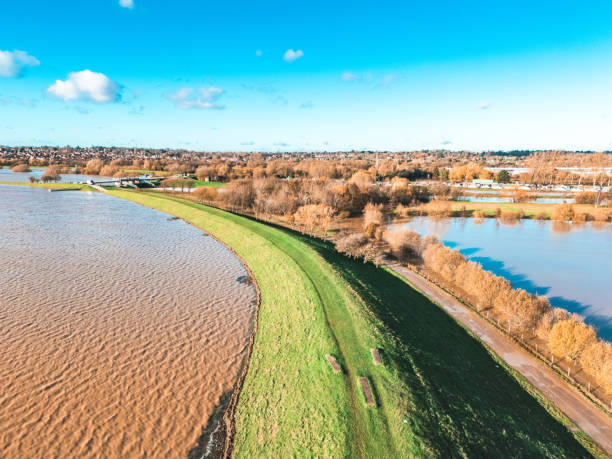
After the Enkelmanns dropped their own lawsuit in 2024, the Stewarts pressed on with a counterattack in court that came before Justice Frances Williams in the state’s Supreme Court to demonstrate that the structure was not just holding back some surface runoff but was obstructing a natural watercourse.
Expert evidence from hydrologists and engineers – to demonstrate that a “nuisance” had been created – expounded theories concerning LiDAR maps, aerial photos, and flood models. That evidence demonstrated the levee had reduced the impact – in two recent flood events – of flooding to the north by redirecting water to the west and north-west.
The Enkelmanns also tried to invoke the “Turn Back Defence” — a legal relic that lets lower landowners block surface water from higher ground.
The court upheld the Stewarts’ contentions. The levee had created an unreasonable interference with land and thereby met the legal threshold of a nuisance.
She also concluded the levee wasn’t just a “defensive” pile of dirt and the Enklemanns’ assertions had no legal leg to stand on.
The defence relied on didn’t apply to riparian flows like Barambah Creek and its tributaries. Even if it did, the levee was built without proper modelling, approvals, or care. As the judge put it, this was “rough and ready” work, not a reasonable or skilled response.
To make matters worse, the Enkelmanns secretly modified the levee again in 2023 — mid-trial — without telling the Stewarts. That only strengthened the case against them.
In the end, the court ordered the levee had to go. Justice Williams ordered its removal and restoration of the land to pre-levee levels, using 2012 LiDAR data as a benchmark.
The Court of Appeal dismissed the Enkelmanns’ appeal in April.
Enkelmann v Stewart [2026] QCA 67 Bond JA, Bradley JA, Doyle JA 17 April 2026