


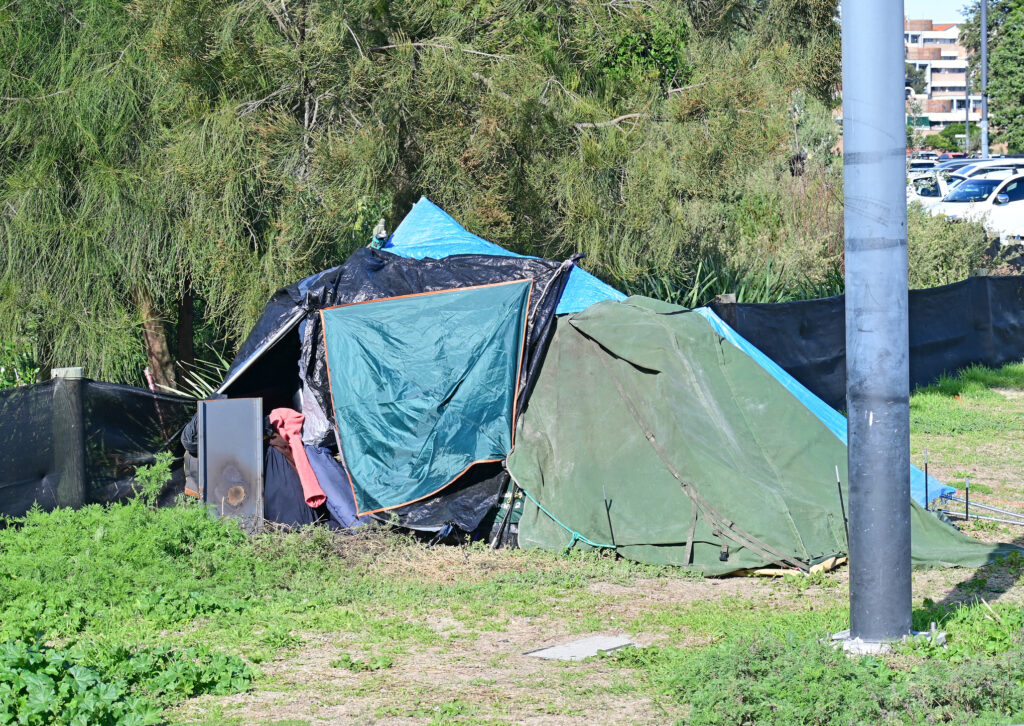
On a patch of scrub at 99 Goodfellows Road, Kallangur, a group of rough sleepers found themselves at the centre of a constitutional-feeling fight about what “home” means when you own nothing but a tent and a tarpaulin.
The story starts at Eddie Hyland Park, another piece of council-controlled public land. Until early 2025, Moreton Bay had a “Persons Experiencing Homelessness Framework” under the Local Government Act 2009, which effectively tolerated camping by people with nowhere else to go.
That changed on 26 February 2025, when – after complaints from nearby residents – council resolved to repeal the framework with effect from 12 March. The law had turned.
But the people did not disappear.
On 9 and 10 April 2025, council officers descended on Eddie Hyland Park with decision and compliance notices.
The notices – said to provide very short timeframes – required the homeless occupants to stop storing goods and stop camping.
A fortnight later, on 24 April, the council returned – this time with heavy machinery.
Whether you call them bulldozers or excavators, the effect was the same: belongings were removed and disposed of. The applicants say personal property, including tents and possessions, was destroyed; the council says it was only “waste” and care was taken to check tents first.
Displaced again, several applicants shifted to the scrub at Goodfellows Road around 10 May 2025.
They were already in court by 22 May, seeking statutory review of the earlier decisions.
But on 18 June, council staff appeared at the new camp. One officer handed out a map showing the group were again on council land; another told them they had two weeks to move, allegedly adding that the old Eddie Hyland Park notices “still apply”.
No fresh paperwork needed, apparently.
The campers filed court proceedings arguing that enforcement of the council’s regulations was incompatible with their human rights under the Human Rights Act.
They pointed to rights to life in section 16, to freedom from cruel, inhuman or degrading treatment in section 17, to privacy and home in section 25, and protection of families in section 26, arguing that pushing people with no alternatives out of their makeshift shelters in winter was the very definition of disproportionate limitation.
The dispute came before Justice Paul Smith in the Queensland Supreme Court.
Council relied on an orthodox public law submission: courts should be slow to enjoin the valid operation of a law; the camping plainly contravened the Camping Local Law; and, in any event, the council had written on 21 July 2025 to say it did not intend to enforce the existing notices.
There was, it said, no “justifiable fear” of immediate action, especially given purported offers of suitable accommodation and ongoing public health concerns about rubbish and sanitation at the site.
In considering whether the applicants had a prima facie case, Justice Smith ruled that there was no evidence council officers had properly considered any human rights issues namely, which rights were affected, how such rights might be impacted, what were the countervailing interests, and then how the respective rights could be balanced.
Given the previous episode at Eddie Hyland Park, the absence of any formal undertaking not to act, and the council’s express reservation of a right to issue new notices, the court was not prepared to rely on a “trust us” letter.
It concluded the interests of justice lay in preserving the status quo. Losing a tent city in mid-winter is not something damages can fix.
Justice Smith restrained the council from enforcing the notices under the camping and alteration local laws, emphasising that the HRA protects “all citizens, including the homeless”, and that allowing potentially unlawful decisions to strip vulnerable people of the only shelter they have would be “wrong” – especially in the cold.
The legality of the council’s broader approach to homelessness will wait for a trial later in the year.
Until then, the Goodfellows Road camp remains a legally protected “home”, however fragile its walls.
Tipler v Moreton Bay City Council[2025] QSC 194 Smith J, 15 August 2025